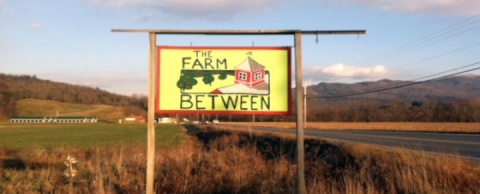
A lot of my work as an AmeriCorps VISTA at Highfields involves work indoors, so it is always very exciting for me to connect with farmers and do work outside. Today I spent the day helping John Hayden, owner of The Farm Between, a certified organic fruit farm in Jeffersonville, Vermont. As we worked, I planned to interview John and learn more information about his compost pilot project.
John and his wife, Nancy, have recently left their off-the-farm jobs as university educators and are working full time on their fruit farm. There, they use ecological principles and practices to grow cold hardy organic fruits, fruit nursery plants (like 50 varieties!), and make awesome fruit syrups. You may have seen their fruit syrup snow cones or sodas at the Burlington Farmer’s Market!
On the agenda for the day was preparing John’s composting operation for the upcoming winter. We constructed a new worm bin, moved John’s food scraps and compost pile to inside his barn, and cleared out his chicken coop. I think John got a little worried about what he got himself into when I, along with a wheelbarrow full of partially decomposed food scraps fell one, two, then three times onto the barn floor. We laughed for a while, reworked my wheelbarrow route and then got right back to work.
I am an organic farmer. I try to get as much organic material in our soil as I can. That’s what feeds our plants. - John Hayden
After briefly stopping our compost relocation project to have some lunch with Nancy, I had the opportunity to go with John on his food scrap pick up route through Cambridge. Our stops included the Cambridge Village Market, Brown and Jenkins Coffee Roasters, and Cambridge Elementary School. John enjoyed saying hello to the usual cast of characters that comprise his food scrap route. All in all, we retrieved about 450 lbs. of food scraps, a trip that John makes on Mondays and Thursdays each week.
When asked what motivates him to do this work, John talked about his interest in providing a community service that will minimize the amount of food waste headed to the landfill. He also explained the economic benefits compost provides such as reducing costs for chicken feed. All of John’s food scraps come from within 2 miles of his house, making composting an affordable venture.
What’s the key to John and Nancy Hayden’s success, you may wonder? They say by implementing a systems approach to their work and gradually increasing the scale of their operation, they’ve developed a solid ‘mom and pop’ business. It’s important to the Haydens to maintain a production scale in which they can still provide thoughtful care to the work they do at all levels. Their compost project can serve as a model for small farmers in that it demonstrates how to close the loop on the local food system and utilize assets that currently exist in their community. Not only are they furthering the success of their own business, they are helping the greater community to embrace environmentally beneficial practices.